Showing posts with label dinosaur. Show all posts

Friday, April 01, 2016

Supernatural Friday: How the October Country Led Me to Writing, or How Ray Bradbury Mentored Me Without Meaning To


You don't have to burn books to destroy a culture. Just get people to stop reading them.”
~Ray Bradbury

“I have never listened to anyone who criticized my taste in space travel, sideshows or gorillas. When this occurs, I pack up my dinosaurs and leave the room.” 
~ 
Ray Bradbury


I just read a great article by author Jonathan Janz about why he likes Stephan King, and how King had led him to become a writer. Well, I have a confession. Being that I am of King’s generation and read most likely what he read growing up and even in college, I will tell you my secret. Which writer most influence me.

Edgar Allan Poe? HP Lovecraft? Yes, I devoured their stories, but it wasn’t them who put me on the path. No, it was two authors, and they were Ray Bradbury and Shirley Jackson. But I will talk about Ray Bradbury today. Bradbury’s books and stories are those even to this day I can read and reread. He is a master storyteller. Who I have seen much of his influences in Stephen King’s work.

Like Something Wicked This Way Comes. The young boys fighting the Dark and his carnival, and learn that wishes can become nightmares. That the innocence of childhood due to monsters can lead the way to growing up. A magical blend of creepiness and nostalgia. 


His Fahrenheit 451 (one of my husband’s favorite science fiction reads) is a science fiction where in the future where firefighters burn books, not put out the fires. It is a classic novel of censorship and defiance, as resonant today as it was when it was first published nearly 50 years ago. A dystopian novel many years before books like this were named that.


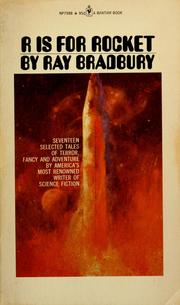
He wrote many themed short stories and combined them in books like Dark Carnival, The Illustrated Man, Dandelion Wine, The Martian Chronicles, R is for Rocket, S is for Space, The Golden Apples of the Sun, The October Country, and I Sing the Body Electric and Other Stories (“I Sing the Body Electric” was originally a teleplay written by Bradbury for the 100thepisode of The Twilight Zone in 1962.).


Stories I remember well from the books above included “The Foghorn”: this story was the basis for the 1953 film The Beast from 20,000 Fathoms, “The “Homecoming,” “The Sound of Thunder”: Bradbury examines what can happen due to one tiny mistake during a time travel prehistoric hunt that can change the history of the world, “The Veldt”: Bradbury imagines a world of enormous flat screen TVs, interactive video game playing, the future generation of children indifferent to violence or homicide, and smart houses 50 years before it is ever invented Except the lions on screen in this futuristic tale are not image, but the real deal. “I Sing the Body Electric”: though “I Sing the Body Electric” was originally a teleplay written by Bradbury for the 100thepisode of The Twilight Zone in 1962, and was how I saw it first before I read it, and “The Lake”: a sort of classic ghost story, but about childhood too.  You can view "I Sing the Body Electric" that was telecast on Twilight Zone at  https://www.youtube.com/watch?v=GhjqabvYvSs

A favorite children’s book of his I love concerns Halloween. The Halloween Tree. Eight boys set out on a Halloween night and are led into the depths of the past by a tall, mysterious character named Moundshroud. They ride on a black wind to autumn scenes in distant lands and times, where they witness other ways of celebrating this holiday about the dark time of year. 


The past few years, I read One More for the Road, and the last of his books I read before his passing, Farewell Summer—sequel to his Dandelion Wine (I suggest read this one before Farewell Summer) and From the Dust Returned . 


From the Dust Returned grew out of a short story, "Homecoming," which appeared in the October 1946 issue of Mademoiselle magazine. Bradbury has published just five other stories about the Elliots, an outlandish, greathearted and loving-spirited Halloween creature clan and their "abnormal" adopted son Timothy. The novel is comprised of the previously published six stories interwoven with newer chapters and "connective tissue" that give us an unforgettable portrait of the rise and fall of a most peculiar brood.


Ray Bradbury takes me and others back to a time where as a child we all want to grow up, and yet, are afraid to. Growing up takes away the wonder of dinosaurs, settling Mars, a man whose illustrations on his flesh move and unsettle as we view them, and where vampires and ghosts share their home with a human boy who only wants to fit in with them. Where summer is just around the corner and autumn means we are have arrived at the October Country which Halloween resides in all its dark glory.


What are your favorite stories or novels by Ray Bradbury? And why do they touch you, and in what way?


Friday, February 06, 2015

Supernatural Friday: A Great Day to Maybe See a Kaiju


"Below the thunders of the upper deep
Far, far beneath in the abysmal sea
His ancient, dreamless, uninvaded sleep
The Kraken sleepeth...
There hath he lain for ages and will lie...
Until the latter fire shall heat the deep;
Then once by man and angels to be seen,
In roaring he shall rise and on the surface die."

--Alfred, Lord Tennyson, British poet (1809-1892)

 http://www.nhm.ac.uk/resources-rx/images/1008/sea-serpent-attack_67451_1.jpg

Sea monsters are sea-dwelling mythical or legendary creatures, often believed to be of immense size. Marine monsters take many forms--sea dragons, sea serpents, or multi-armed beasts. They can be slimy or scaly, and often pictured threatening ships or spouting jets of water. The definition of a "monster" is subjective, and some sea monsters may have been no doubt based on scientifically accepted creatures such as whales and types of giant and colossal squid. Sea monsters have been seen in the Pacific, Atlantic, Indian, and Southern Oceans. 

HIC SUNT DRACONES.” The phrase translates from the Latin as “here are dragons.” Etched on the Lenox Globe is the eastern coast of Asia. It is one of the oldest terrestrial globe maps, dating to 1510. The same phrase is also on one other historical artifact—a 1504 globe crafted on an ostrich egg—depictions of monsters and mythological beasts are common on early maps.


Types of Sea Monsters

The Japanese Daikaiju are beasts named by the Japanese that literally translates to "strange creature," and is used to refer to a genre of tokusatsu entertainment. Kaiju films usually showcase monsters of any form, usually attacking a major Japanese city or engaging another and more monsters in battle. Godzilla is an example of a daikaiju; produced by Toho Films, as was other giant monsters Gamera, Mothra, Rodan, King Ghidorah (who I suspect was inspired by the Eastern dragons of Asian mythology and the Hydra of Greek mythology), Mechagodzilla and Daimajin. Some like Godzilla can be called a sea monster, others, not. You can find kaiju films listed here: Toho Kaiju  More besides the Toho monsters can be found here: Giant Monster Movies


Several pictures of sea serpents on old maps appear to be based on sightings of the oarfish, or ribbon-fish (Regalecus glesne). A long, eel-shaped fish that grows to 11 meters (36 feet), the oarfish has a crest of bright red spines on its head and a spiny dorsal fin running down its entire back.
 http://www.factofun.com/wp-content/uploads/2014/04/kraken-mythical-creature.jpg

The kraken of myth may be the largest sea monster ever imagined. Described in Scandinavian stories dating back to about AD 1180, the kraken was said to live near Norway and Iceland. Some stories described it as more than 2.5 kilometers (1.5 miles) around with arms as large as ship's masts. This may have been based from sightings of tentacles of sea monsters proven real; giant squid and giant octopus. This multi-armed monster rarely attacked humans, preferring to stay in deep water where it feasted on fish. The chief dangers came from being too close when it surfaced--or drawing close when it sank, as a boat could be sucked down in the whirlpool created when it submerged. Stories were told that when a kraken surfaced, a shimmering cascade of fish could be seen tumbling down its back.


Giant Squid (proven real): As far back as five hundred years ago, maybe even farther back, sailors in northern Europe told of an amazing creature: A monster bigger than a man with numerous long, snakelike arms covered with suckers for grabbing prey. Evidence for this so-called devil-fish included bits of giant tentacles found in whale stomachs and vicious battle scars left on the skin of whales by its suckers and claws. Eventually, in the 1850s, scientists recognized the devil-fish as an authentic animal--the giant squid.

The largest eyes of any living creature: Each eye can be as large as a human head. Sharp, parrot-like "beaks" provided the first hard proof of their existence. In 1853, a giant squid washed ashore in Denmark and was cut up for bait, but its beak was saved, leading to recognition of the genus Architeuthis in 1857. A deep-ocean creature rarely seen near the surface; most sightings involve dying animals or corpses that wash up on shore. Suckers can leave scars on whales. After the success of Jaws, American author Peter Benchley frightened readers all over again in 1991 with his bestselling novel Beast, about a giant squid. In the novel, the squid attacks several people--something yet to occur in reality. An adult specimen had been found in one piece until 2007, when fishermen hauled one up near New Zealand. Dubbed the "colossal squid," it is thought to be the largest living creature without a backbone. Classified in its own genus, Mesonychoteuthis hamiltoni outweighs all of the eight giant squid species in the genus Architeuthis.

 http://www.amnh.org/var/ezflow_site/storage/images/import_exhibits/import_exhibit_images/gesner4_image_3391_med.jpg/235877-1-eng-US/gesner4_image_3391_med.jpg.jpg

Gunakadeit (Goo-na'-ka-date) is a monster from a Tlingit legend who brought prosperity and good luck to a village in crisis, people starving in the home they made for themselves on the southeastern coast of Alaska.
 

Mythical Sea Monsters
The Aspidochelone, a giant turtle or whale that appeared to be an island, and lured sailors to their doom
Capricorn, Babylonian Water-Goat, in the Zodiac
Cetus
Charybdis of Homer, a monstrous whirlpool that sucked any ship nearby beneath the ocean
Cirein-cròin
Coinchenn, from whose bone the Gae Bulg is made in Celtic mythology
The Devil Whale, Extremely large demonic whale, the size of an island.
Hydra, Greece
Iku-Turso, reputedly a type of colossal octopus or walrus
Jörmungandr, the Norse Midgard Serpent.
Kraken, a gigantic octopus, squid or crab-like creature
Leviathan
Makara
Proteus
Scylla of Homer, a six-headed, twelve-legged serpentine that devoured six men from each ship that passed by
Sirens of Homer
Taniwha
The Rainbow Fish
Tiamat
Umibōzu
Yacumama, South America
Bakunawa, Philippines

Monsters reports in modern times include Ayia Napa Sea Monster, of Ayia Napa, Cyprus, Cadborosaurus of the Pacific Northwest, Champ of Lake Champlain, Chessie of the Chesapeake Bay and even seen in the Appomattox River near Hopewell, Virginia, Nessie of Loch Ness, Lusca,Morgawr, Shore Laddie Arnarfjörður, Westfjords, Iceland, Sea Horse Arnarfjörður, Westfjords, Iceland, The Shell monster Arnarfjörður, Westfjords, Iceland, and the Merman Arnarfjörður, Westfjords, Iceland.

Monsters that people claimed to have run-ins with maybe surviving specimens of giant marine reptiles, such as an ichthyosaur or plesiosaur, from the Jurassic and Cretaceous Periods, or extinct whales like Basilosaurus. Again, who knows? For the prehistoric fish, coelacanth, first discovered still living in 1938, when a live specimen was caught in South Africa. Since then, more specimens have been seen and photographed, and a second coelacanth species was even found in Indonesia in 1999. Coelacanths are large predators, up to 2 meters (6′ 6″) long. They feed on smaller fish, including small sharks. Usually found in deep, dark waters, and rarely captured and consumed due to their horrible taste, coelacanths are still considered critically endangered nowadays.


Are there unknown creatures, dinosaurs, or else out there in the oceans of the world? Are are they just our imagination? It does not matter; they make great fodder for writers' stories and filmmakers' movies, but most of all, maybe, just maybe, some scientist will prove one of these myths to be really existing in the sea.  Just as long it doesn't decided to go on land to destroy New York City  or Tokyo--the cities need a rest from monster bashing!