Showing posts with label Ireland. Show all posts

Monday, May 07, 2018

Supernatural Friday: Fairy, Fae, Faery, It All Leads to the Little People


The term Faerie is derived from "Fé erie.” It means the enchantment of the Fées, while Fé is derived from Fay, derived from Fatae, or the Fates. The term originally applied to supernatural women who directed the lives of men and attended births. Now it has come to mean any supernatural creature tied to the earth, except monsters and ghosts. The modern term, “fairy,” was created, due to fairy tales.

In Ireland, the Faeries are called the Aes Sídhe (the singular being Aes Sídh). Sídhe happens to be the name for the earthen mounds and hills dotting the Irish landscape. Irish tales claim the Faeries live under these mounds, so the term "sídhe" has come to mean Faerie in general. The word also refers to the palaces, courts, halls, and residences of the Faeries. Fairies are also known b y other euphemisms, "the Fair Folk", "the Good Neighbors", "the Little Folk", "the Little Darlings", and "the People of Peace". The reason why: first is to avoid attracting their attention. The second was to avoid insulting them.

Thanks to legends and folklore of Scandinavia the elf was used the same way Aes Sídh was used in Ireland, to refer to any Faeries, and it was introduced to Britain by the Anglo-Saxons. English literature made the elves the diminutive fairies of Spenser and Shakespeare, which in conventional Faerie lore would be the equivalent of the little nature spirits.

There are tales in myths of how fairies came to be. The first way had them as fallen angels. A few did not follow Lucifer into Hell, but decided to reside on earth.

Second: It is explained them as the dead not good enough to enter Heaven, but too good for Hell. It is said they live in limbo as they recreate their former lives.

Third and last: This has them as children of Eve. She hides them from God, who curses her that the children she tried to hide from Him would remain hidden from her, and subsequently all Mankind.

Myth also divides fairies into three groups. This explains Faeries as an older race of people driven into hiding by invading newcomers. This old race continues to survive in part by stealing tools, food, animals, even woman and children from the invaders, attacking solitary travelers who wander into their territory, or haunting isolated farms where they do work in exchange for food. In time, the invaders come to think of these people as having supernatural powers, and develop traditions about them to protect themselves and try to stay out of their way. Of course, this may have occurred in Ireland, when the Mesolithic hunter-gathers were supplanted by Neolithic farmers sometime around 4500 B.C. Irish mythological history says defeated races retreated under mounds to become the Faeries (this is also in England too—the “little people” of mounds there). It was also said that Fairies might be a form of ancestor worship, especially forebears from a past "Golden Age" of heroic history. Legends and folktales tell how great kings and heroes entered Faerieland when they died, to establish new kingdoms under hills and mounds. Does this not also sound like what happened to King Arthur, taken to Avalon? But then the Celts were not only in Ireland, but in England and Wales then, too.  Same of some in Scotland. Anyway, the Irish generally believed that Faeries were the dead, and Faerieland was the afterlife. Even after their conversion to Christianity, the Irish continued to believe that most people when they died waited for the Last Judgment inside one or another Faerie mound. Last theory concerned that Faeries were dwindled gods. It  is said that generations of people retold their myths, changing them from deities to nature spirits, especially after the coming of Christianity. In Ireland, the legends and folktales say that the ancient Tuatha Dé Danann and Fir Bholg retreated under the mounds to become the first Faeries, and most mythographers believe they were the gods of the ancient Irish.


There is a connection in mythology of people and children being taken by fairies and coming back years later hardly aged. Sounds somewhat like alien abduction, doesn’t it? Fairies steal babies, leaving a changeling in the child’s place. Fairies stole young women as brides, or perhaps for other, less honorable purposes. In the aptly named tale “Stolen Bride,” a gang of fairies carries off a young woman, and something similar happens in "Jamie Freel and the Young Lady.” In both cases, the women are put under an enchantment that leaves them mute and confused.   And sometimes the women are left pregnant—like in alien abduction stories—only to lose the child one night after abduction.

Now in Virginia where I live, there is a state park that is named Fairy Stone State Park. It is the largest of Virginia's six original state parks, is home to its namesake "fairy stones." These rare mineral crosses and the park's scenic beauty, rich history and ample recreational opportunities make it a local and regional favorite. The 4,639 acres that make up the park were donated by Junius B. Fishburn, former owner of the Roanoke Times, in 1933. The Civilian Conservation Corps originally built the park, its lake and many structures still in use there.

For many years people held these little crosses in superstitious awe, firm in the belief that they protected the wearer against witchcraft, sickness, accidents and disaster. Fairy stones are staurolite, a combination of silica, iron and aluminum. Staurolite crystallizes at 60 or 90 degree angles, hence the stone's cross-like structure. Found only in rocks once subjected to great heat and pressure, the mineral was formed long, long ago, during the rise of the Appalachian Mountains. The stones are most commonly shaped like St. Andrew’s cross, an "X," but "T" shaped Roman crosses and square Maltese crosses are the most sought-after. The rare staurolite stones are found elsewhere but not in such abundance as at Fairy Stone State Park.

The Legend of the Fairy Stone: Many hundreds of years before Chief Powhatan’s reign, fairies were dancing around a spring of water, playing with naiads and wood nymphs, when an elfin messenger arrived from a city far away. He brought news of the death of Christ. When these creatures of the forest heard the story of the crucifixion, they wept. As their tears fell upon the earth, they crystallized to form beautiful crosses. 

If you like to visit this park, find out more at the official website at http://www.dcr.virginia.gov/state-parks/fairy-stone#general_information


Thursday, March 15, 2018

Supernatural Friday: St. Patrick's Day is a Very Mythic Day


Sorry to be late with posts, but the past two weeks I've been to a convention, then became ill from a sinus infection. Next Friday, will be about the ghost stories of the haunted Biltmore Hotel in Rhode Island I stay at for Stokercon 2018, and what happened to me there.

Once upon a time, blue was the color to wear. That's right, not green, but blue! Because blue was the color of Ireland's flag. It was changed to green most likely due to the shamrock.


St. Patrick chased the snakes out of Ireland. Except that would be hard, as there never been snakes in Ireland. Separated from England and the Continent thousands of years ago, Ireland emerged from the Ice Age snake-free.

Contrary to popular belief, the shamrock is not the official emblem of Ireland. Ask any head of state or diplomat. That honor goes to the Celtic harp. But in the hearts and minds of people all over the world, the shamrock is considered the symbol of Ireland. You could say the shamrock is the emblem of Irish culture.

The shamrock was once known as "seamróg", pronounced "Seamroy,”  which meant "little clover". They also mention the fact that it is a very common clover that grows heartily in Ireland.

Many agree that the ancient Druids honored it as a sacred plant. The Druids believed the shamrock had the power to avert evil spirits. Some people still believe the shamrock has mystical, even prophetic, powers. It is said that the leaves of shamrocks turn upright whenever a storm is coming.

According to Lady Wilde, the shamrock "enlightens the brain and makes one see and know the truth".

The ancient Irish Celts also revered the shamrock because it has three leaves, and they considered "3" to be a sacred number. The ancient Celtic Druids believed many numbers held mystical powers.

The three leaves shaped like hearts were associated with the Triple Goddess of Celtic mythology, otherwise known as the "Three Morgans". The Triple Goddess represented the Triple Mothers, the hearts of the ancient Celtic tribes.

This Celtic tradition of honoring "3's" continued in Ireland for millennia.

Three was also sacred to devotees of the goddess, Brighid, signifying totality. And the Irish bards continued the significance of "3's" by using triple repetition in their storytelling rhythms.


Legend of the Banshee
When most people think of a Banshee, they imagine a floating, spectral figure wailing and generally being extremely frightening. You may also be aware of the old belief which states that Banshees are harbingers of death.

What is a Banshee?
A Banshee is said to be a fairy in Irish legend and her scream is believed to be an omen of death. The scream is also called ‘caoine’ which means ‘keening’ and is a warning that there will be an imminent death in the family and as the Irish families blended over time, it is said that each family has its own Banshee!
A Banshee is a disembodied spirit and can appear in any of the following forms:
§  A beautiful woman wearing a shroud
§  A pale woman in a white dress with long red hair
§  A woman with a long silver dress and silver hair
§  A headless woman carrying a bowl of blood that is naked from the waist up
§  An old woman with frightening red eyes, a green dress and long white hair
§  An old woman with a veil covering her face, dressed all in black with long grey hair

Origins
Historians have traced the first stories of the Banshee to the 8th century which were based on a tradition where women sang a sorrowful song to lament someone’s death. These women were known as ‘keeners’ and since they accepted alcohol as payment, they were said to be sinners and punished by being doomed to become Banshees. According to the mythology of the Banshee, if she is spotted, she will vanish into a cloud of mist and this action creates a noise similar to a bird flapping its wings. Legend says that Banshees don’t cause death; they only serve as a warning of it.

Banshees – The Good & Bad
Not all Banshees are hate-filled creatures; there are some that had strong ties to their families in life and continued to watch over them in death. When they manifest themselves, these Banshees appear as beautiful enchanting women that sing a sorrowful, haunting song which is filled with concern and love for their families. This song can be heard a few days before the death of a family member and in most cases the song can only be heard by the person for whom it is intended. 

On the other side of the coin we have the angry and scary Banshee that most of us are familiar with. During their lives, these women had reasons to hate their families and appear as distorted and frightening apparitions filled with hatred. The howls emitted by these Banshees are enough to chill you to the bone and rather than appearing to warn a family member, these Banshees are celebrating the future demise of someone they loathed!

And forget that cute little guy on the Lucky Charms cereal box. Leprechauns are more like the character played Warwick Davis in the Leprechaun movies is not cute or nice. Like many fairies, they were brutish and nasty little people. They were the grumpy, insufferable, alcoholic elves in employ of other fairies. 

According to the book The Element Encyclopedia of Magical Creatures, by John and Caitlin Matthews, the leprechaun legend can be traced back to eighth-century tales of water spirits called "luchorpán," meaning small body. The legend eventually evolved into a mischievous household fairy said to haunt cellars and drink heavily.

Leprechauns are shoemakers. Some researchers claim that the word leprechaun came from the Irish 'leath bhrogan,' meaning shoemaker, said to be the sprites' main vocation.

If you happen to come across a Leprechaun, be sure to hold on to him.  According to Irish legends, people lucky enough to capture a 
leprechaun can barter his freedom for three wishes. But dealing with a leprechaun can be a tricky proposition.

A leprechaun is a trickster figure who cannot be trusted. Folklorist Carol Rose offers a typical tale of leprechaun trickery in her encyclopedia "Spirits, Fairies, Leprechauns, and Goblins," it concerns "a man who managed to get a leprechaun to show him the bush in the field where his treasure was located. Having no spade [shovel], the man marked the tree with one of his red garters, then kindly released the sprite and went for a spade. Returning almost instantly he found that every one of the numerous trees in the field sported a red garter!"

Like most fairies, leprechauns have a distinctive sound associated with them. While the Irish banshee can be identified by a mournful wail, leprechauns are recognized by the tap-tap-tapping of a tiny cobbler hammer, driving nails into shoes, that announces they are near.

Leprechauns are always male. In the 1825 book "Fairy Legends" noted that Leprechauns seem to be entirely male and solitary. No female Leprechauns at all! They are often described as bearded old men dressed in green and wearing buckled shoes. Sometimes they wear a pointed cap or hat and may smoke a pipe. But Leprechauns weren't always dressed in green, nor wore pointed caps or  hats. Early tales of the creatures reported wearing red clothing and tri-cornered hat perched on their heads. 

And according to Carolyn White’s A History of Irish Fairies, there is no record of any female Leprechauns existing. This of course means that Leprechauns defy typical laws of biology by surviving and there is no evidence which tells the story of how they breed. The book also mentions that Leprechauns are deformed children of the fairies.

Next time you watch that horror film, Leprechaun, remember that is the true fey being.


But no matter if myth or truth, enjoy the day and dance a little jig. Just don't overdo the green beer and Irish food.


HAPPY ST. PATRICK'S DAY. 

ERIN Go BRAGH!

Friday, March 17, 2017

Supernatural Friday: St Patrick Day's Legends


Once upon a time, blue was the color to wear. That's right, not green, but blue! Because blue was the color of Ireland's flag. It was changed to green most likely due to the shamrock.

St. Patrick chased the snakes out of Ireland. Except that would be hard, as there never been snakes in Ireland. Separated from England and the Continent thousands of years ago, Ireland emerged from the Ice Age snake-free.

And forget that cute little guy on the Lucky Charms cereal box. Leprechauns are not cute or nice. Like many fairies, they were brutish and nasty, besides being short too. They were the grumpy, insufferable, alcoholic elves in employ of other fairies. They made shows for the fairies (why they're called cobblers) and guarded their treasure vigorously. Unfortunately to their eternal frustration, their treasure was revealed by rainbows. Next time you watch that horror film, Leprechaun, the actor plays the true fey being.


But no matter if myth or truth, enjoy the day and dance a little jig. Just don't overdo the green beer and Irish food.

HAPPY ST. PATRICK'S DAY. 
ERIN Go BRAGH!

Friday, September 25, 2015

Supernatural Friday: Jack-O-Lantern-Truth and Folklore

Next Friday, there will be no Supernatural Friday, as I will be on a book tour for my new release, Paranormal Petersburg and the Tri-Cities Area, and stop on my log on Tuesday, September 28th, so come back then and leave a comment with your and email to be entered to win a signed copy of my book.  Next Friday, I will be stopping on Lela Markham's Blog


We carve jack-o-lanterns from pumpkins around Halloween. People carve monstrous faces the pumpkins wear friendly faces, or famous characters from movies, TV and books--like the stormtrooper one my husband carved in one of the craft pumpkin we bought a few years ago. And yes, you don't have to use the gourds you find at the supermarket or grown at pumpkin farms, you can use craft pumpkins found at craft stores, too. You can also paint pumpkins even. This is safer for children to do, rather than using carving implements. They can use their own paints to paint cool faces or by using stencils, faces or scenes on the flesh of the pumpkin.

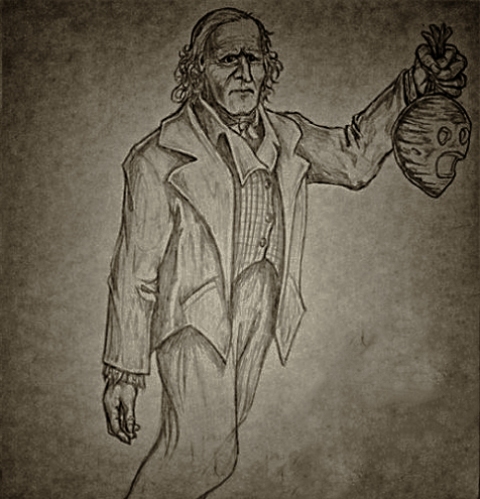
This tradition of making a jack-o-lantern goes back long ago in Ireland. They used turnips then. The Irish carved these vegetables and left them on doorsteps to ward off evil spirits. But it did not become part of Halloween until 1866. That was in America, and not in Ireland or Britain. There is no documented proof to substantiate that the jack-o-lanterns were ever part of Halloween before this date.
There is folklore behind the jack-o-lantern. In one version of the story, Stingy Jack was a miserly old man who runs into the Devil. He asks if the Devil would turn into a coin he could use to pay some Christian villagers he owed. These that would be a great joke.

But Jack pocketed him. He had a cross in the pocket, too. The Devil was stuck, and the only way he would be freed was if he promise not to take Jack's soul when he dies. The Devil agreed to the deal and set free.

Jack finally passes away. His spirit tries to enter into Heaven, but the gates remain shut to him. There is too great of a stain on his soul for Heaven to allow him inside. And thanks to his agreement with the Devil, he discovers that he is barred from Hell, too. The Devil tosses him a turnip and an ember made from Hellfire.

“Take that turnip, dig all its insides out, and place the ember inside it. Use it as a lantern to find your way across the mortal world to find a resting place. That is all I will do for you. Good riddance.”

So with only the lantern to light his way, Jack wanders the earth and searches for a resting place. He never finds it. Jack became known as Jack-o'-Lantern.
There are other versions of this Irish tale, even an African-American one. One of those tales uses the Grim Reaper in place of the Devil, The Grim Reaper takes Jack's head to Hell with him. Jack uses a pumpkin to replace his head.

When you carve that pumpkin, and set a lighted candle or battery operated candle inside it, stand on your porch and watch the costumed children wandering the street. Think of Stingy Jack, doomed to roam the earth forever.


Will you take pity on him if he comes to your door?

Friday, October 17, 2014

Supernatural Friday: Did a Black Cat Cross Your Path Today?


I own a black cat. Love her.  I can’t ever see her as devilish or evil. And yet, black cats are in the United States considered bad luck if one crosses your path. Plus they are associated with witches around Halloween. What started this for our furry black felines?


These obsidian felines were not always feared or a part of superstitious lore. Dating back as far as 3000 BC in Egypt, cats of all colors, including black ones, were held in high esteem. To kill one was considered a capital crime.

The Nordic goddess, Freya was also a fierce warrior as shared with us by Ethan S. One of the many names by which she was known was the Mistress of the Cats, and it was said that the chariot in which she sat was drawn by a pairs of great cats with fur blacker than the midnight sky.


Then around medieval times, cats taken care of by old women who practiced healing and lived alone were considered familiars if the old woman (and sometimes man) were accused of witchcraft and convicted, burned at the stake. As for why particularly black cats, it seem to superstitious people, once the cat went out into the dark of night they appeared to disappear, except for their yellow or green eyes. The same would go for black dogs too. Of course, we know that the animal having black fur and the night being pitch black, well, yeah, they seemed to vanish.  Plus black cats born in May seemed to be strongly associated with witchcraft and were often drowned. It is bad luck to discuss family matters when a black cat is present, lest it be a witch in disguise.

Evil omens and harboring the ability to change into human shape to act as a spy or messenger for witches or demons are some of the mostly widely known legends of black cats (in the US). When settlers arrived in the Americas, they already had a deepening suspicion of anything associated with the devil. Due to the sisterhood of witch and black cat, anyone caught with a black cat was severely punished or even killed. Similar superstitions led people to kill black cats during the Middle Ages, increasing the rat population and the spread of the bubonic plague.


A legend in Wales tells about one black cat. When people arrived in this town that had been ravaged by the Black Plague, the only living creature they found was a single black cat. The black cat is now the traditional mascot of Kidwelly!
In Great Britain and in Ireland, black cats are considered good luck. One way this might be so, English monarch Charles I held a belief that when his treasured black cat passed, he claimed that his luck was gone and he was arrested the very next day and charged with high treason.  Also, in the UK, a black cat crossing your patch is a sign of good luck.

Some bad luck a black cat might deliver:

If you are driving and a black cat crosses in front of you, you should turn your car around or receive bad luck.

The gambling world holds the belief that as you are driving to a casino, if a black cat runs across your road or path, you should not go to the casino. Most players believe that black cats bring bad luck.

Crossing paths of a person is considered an omen of misfortune and death—kind of like the banshee’s scream heralds death for the person who hears it. Things are a bit more complicated in Germany. In Germany though, if a black cat crosses a person’s path from right to left, that is a bad omen, and yet, if done from left to right,  the cat is granting favorable times.

Pirates in the 19th Century believed that if a black cat walks towards someone, that person will have bad luck. But if it walks away from someone, that will bring good luck to that person. If a black cat walks onto a ship and then walks off it, the ship is doomed to sink on its next trip.

Sailors often sought out a black cat to become a ship’s cat, as it brought good luck. Fishermen’s wives kept black cats at home in the hope that they would be able to use their influence to protect their husbands while at sea.

In Japan, black manekineko (beckoning cats) are a wish for good health.

Dreaming of a black cat us considered lucky for the dreamer.

Black cats protect their human’s house from evil spirits, and it is said, take away the bad energy in the house.

From Scottish lore, a strange black cat on a porch brings prosperity to the owner.

It is believed that a lady who owns a black cat will have many suitors. So, for those looking for a boyfriend, get a black cat!


Not just black cats, but all:

Cats should never be bought with money. Doing so means they will be bad mousers. (Shelters looking to get their cats adopted, this might be a good ploy to use.)

And last, but not least, a story about a black cat by Edgar Allan Poe.   Black Cat


Friday, March 15, 2013

Supernatural Friday: Myths of St. Patrick's Day


St. Patrick's Day is this Sunday. What do you know about it?
You say I will be wearin' o' the green that day because that is right. But once upon a time, did you know blue was the color to wear? Because blue was the color of Ireland's flag. It was changed to green due to the color of Ireland's shamrock, no doubt.
St. Patrick chased the snakes out of Ireland. Except that would be hard, as there never been snakes in Ireland. Spearheaded from England and the Continent thousands of years ago, Ireland emerged from the Ice Age snake-free.
And forget that cute little guy on the Lucky Charms cereal box. Leprechauns are not cute or nice. Like many fairies, They were brutish and nasty, besdies being short too. They were the grumpy, insufferable , alcoholic elves in employ of other fairies. They made shows for the fairies (why they're called cobblers) and guarded their treasure vigorously. Unfortunately to their eternal frustration, their treasure was revealed by rainbows. Next time you watch that horror film, Leprechaun, the actor plays the true fey being.
No matter if myth or truth, enjoy the day and dance a jig. Just don't overdo the green beer and Irish food.
 
 
HAPPY ST. PATRICK'S DAY.