Showing posts with label Irish. Show all posts

Thursday, March 15, 2018

Supernatural Friday: St. Patrick's Day is a Very Mythic Day


Sorry to be late with posts, but the past two weeks I've been to a convention, then became ill from a sinus infection. Next Friday, will be about the ghost stories of the haunted Biltmore Hotel in Rhode Island I stay at for Stokercon 2018, and what happened to me there.

Once upon a time, blue was the color to wear. That's right, not green, but blue! Because blue was the color of Ireland's flag. It was changed to green most likely due to the shamrock.


St. Patrick chased the snakes out of Ireland. Except that would be hard, as there never been snakes in Ireland. Separated from England and the Continent thousands of years ago, Ireland emerged from the Ice Age snake-free.

Contrary to popular belief, the shamrock is not the official emblem of Ireland. Ask any head of state or diplomat. That honor goes to the Celtic harp. But in the hearts and minds of people all over the world, the shamrock is considered the symbol of Ireland. You could say the shamrock is the emblem of Irish culture.

The shamrock was once known as "seamróg", pronounced "Seamroy,”  which meant "little clover". They also mention the fact that it is a very common clover that grows heartily in Ireland.

Many agree that the ancient Druids honored it as a sacred plant. The Druids believed the shamrock had the power to avert evil spirits. Some people still believe the shamrock has mystical, even prophetic, powers. It is said that the leaves of shamrocks turn upright whenever a storm is coming.

According to Lady Wilde, the shamrock "enlightens the brain and makes one see and know the truth".

The ancient Irish Celts also revered the shamrock because it has three leaves, and they considered "3" to be a sacred number. The ancient Celtic Druids believed many numbers held mystical powers.

The three leaves shaped like hearts were associated with the Triple Goddess of Celtic mythology, otherwise known as the "Three Morgans". The Triple Goddess represented the Triple Mothers, the hearts of the ancient Celtic tribes.

This Celtic tradition of honoring "3's" continued in Ireland for millennia.

Three was also sacred to devotees of the goddess, Brighid, signifying totality. And the Irish bards continued the significance of "3's" by using triple repetition in their storytelling rhythms.


Legend of the Banshee
When most people think of a Banshee, they imagine a floating, spectral figure wailing and generally being extremely frightening. You may also be aware of the old belief which states that Banshees are harbingers of death.

What is a Banshee?
A Banshee is said to be a fairy in Irish legend and her scream is believed to be an omen of death. The scream is also called ‘caoine’ which means ‘keening’ and is a warning that there will be an imminent death in the family and as the Irish families blended over time, it is said that each family has its own Banshee!
A Banshee is a disembodied spirit and can appear in any of the following forms:
§  A beautiful woman wearing a shroud
§  A pale woman in a white dress with long red hair
§  A woman with a long silver dress and silver hair
§  A headless woman carrying a bowl of blood that is naked from the waist up
§  An old woman with frightening red eyes, a green dress and long white hair
§  An old woman with a veil covering her face, dressed all in black with long grey hair

Origins
Historians have traced the first stories of the Banshee to the 8th century which were based on a tradition where women sang a sorrowful song to lament someone’s death. These women were known as ‘keeners’ and since they accepted alcohol as payment, they were said to be sinners and punished by being doomed to become Banshees. According to the mythology of the Banshee, if she is spotted, she will vanish into a cloud of mist and this action creates a noise similar to a bird flapping its wings. Legend says that Banshees don’t cause death; they only serve as a warning of it.

Banshees – The Good & Bad
Not all Banshees are hate-filled creatures; there are some that had strong ties to their families in life and continued to watch over them in death. When they manifest themselves, these Banshees appear as beautiful enchanting women that sing a sorrowful, haunting song which is filled with concern and love for their families. This song can be heard a few days before the death of a family member and in most cases the song can only be heard by the person for whom it is intended. 

On the other side of the coin we have the angry and scary Banshee that most of us are familiar with. During their lives, these women had reasons to hate their families and appear as distorted and frightening apparitions filled with hatred. The howls emitted by these Banshees are enough to chill you to the bone and rather than appearing to warn a family member, these Banshees are celebrating the future demise of someone they loathed!

And forget that cute little guy on the Lucky Charms cereal box. Leprechauns are more like the character played Warwick Davis in the Leprechaun movies is not cute or nice. Like many fairies, they were brutish and nasty little people. They were the grumpy, insufferable, alcoholic elves in employ of other fairies. 

According to the book The Element Encyclopedia of Magical Creatures, by John and Caitlin Matthews, the leprechaun legend can be traced back to eighth-century tales of water spirits called "luchorpán," meaning small body. The legend eventually evolved into a mischievous household fairy said to haunt cellars and drink heavily.

Leprechauns are shoemakers. Some researchers claim that the word leprechaun came from the Irish 'leath bhrogan,' meaning shoemaker, said to be the sprites' main vocation.

If you happen to come across a Leprechaun, be sure to hold on to him.  According to Irish legends, people lucky enough to capture a 
leprechaun can barter his freedom for three wishes. But dealing with a leprechaun can be a tricky proposition.

A leprechaun is a trickster figure who cannot be trusted. Folklorist Carol Rose offers a typical tale of leprechaun trickery in her encyclopedia "Spirits, Fairies, Leprechauns, and Goblins," it concerns "a man who managed to get a leprechaun to show him the bush in the field where his treasure was located. Having no spade [shovel], the man marked the tree with one of his red garters, then kindly released the sprite and went for a spade. Returning almost instantly he found that every one of the numerous trees in the field sported a red garter!"

Like most fairies, leprechauns have a distinctive sound associated with them. While the Irish banshee can be identified by a mournful wail, leprechauns are recognized by the tap-tap-tapping of a tiny cobbler hammer, driving nails into shoes, that announces they are near.

Leprechauns are always male. In the 1825 book "Fairy Legends" noted that Leprechauns seem to be entirely male and solitary. No female Leprechauns at all! They are often described as bearded old men dressed in green and wearing buckled shoes. Sometimes they wear a pointed cap or hat and may smoke a pipe. But Leprechauns weren't always dressed in green, nor wore pointed caps or  hats. Early tales of the creatures reported wearing red clothing and tri-cornered hat perched on their heads. 

And according to Carolyn White’s A History of Irish Fairies, there is no record of any female Leprechauns existing. This of course means that Leprechauns defy typical laws of biology by surviving and there is no evidence which tells the story of how they breed. The book also mentions that Leprechauns are deformed children of the fairies.

Next time you watch that horror film, Leprechaun, remember that is the true fey being.


But no matter if myth or truth, enjoy the day and dance a little jig. Just don't overdo the green beer and Irish food.


HAPPY ST. PATRICK'S DAY. 

ERIN Go BRAGH!

Sunday, October 29, 2017

Countdown to. . . HALLOWEEN! (Legend of Stingy Jack}


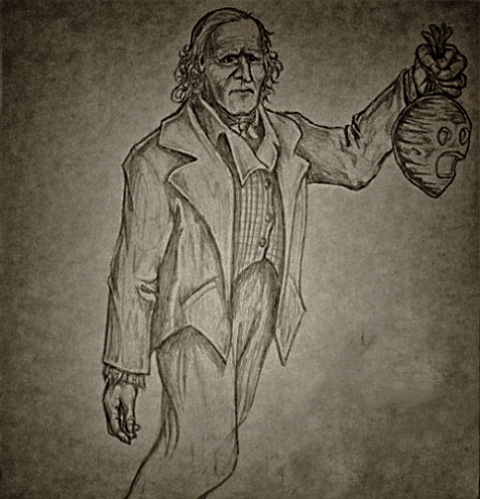
Halloween is fast approaching. People are purchasing pumpkins at the store or from a nearby pumpkin patch , so they can make jack-o-lanterns to peer out from porches and doorsteps in the United States and other parts of the world. Gourd-like orange fruits inscribed with ghoulish faces and illuminated by candles are a sure sign of the Halloween season. The practice of decorating “jack-o’-lanterns”—the name comes from an Irish folktale about a man named Stingy Jack—originated in Ireland, where large turnips and potatoes served as an early canvas. Irish immigrants brought the tradition to America, home of the pumpkin, and it became an integral part of Halloween festivities. 

Stingy Jack was a miserable, old drunk who loved playing tricks on anyone and everyone. One dark, Halloween night, Jack ran into the Devil himself in a local public house. Jack tricked the Devil by offering his soul in exchange for one last drink. The Devil quickly turned himself into a sixpence to pay the bartender, but Jack immediately snatched the coin and deposited it into his pocket, next to a silver cross that he was carrying. Thus, the Devil could not change himself back and Jack refused to allow the Devil to go free until the Devil had promised not to claim Jack's soul for ten years.

The Devil agreed, and ten years later Jack again came across the Devil while out walking on a country road. The Devil tried collecting what he was due, but Jack thinking quickly, said, "I'll go, but before I do, will you get me an apple from that tree?"

The Devil, thinking he had nothing to lose, jumped up into the tree to retrieve an apple. As soon as he did, Jack placed crosses all around the trunk of the tree, thus trapping the Devil once again. This time, Jack made the Devil promise that he would not take his soul when he finally died. Seeing no way around his predicament, the Devil grudgingly agreed.

When Stingy Jack eventually passed away several years later, he went to down to Hell to see the Devil, but the Devil kept the promise that had been made to Jack years earlier, and would not let him enter. 

Thinking, Ah, Heaven will surely let me in then!, he wandered up to the Gates of Heaven, but was refused entrance because of his life of drinking and because he had been so tight-fisted and deceitful.   

 
Jack went back to Hell to see the Devil.

"Where can I go?" asked Jack.

"Back to where you came from!" replied the Devil. "You doomed yourself to roam the earth, a restless soul who can find no rest ever." Lucifer tossed him a turnip and a ember straight from the fires of Hell itself. "Here, hollow out this turnip and place this ember inside. Use its light to find your way through eternity." 

And to this day, Jack wanders, never stopping in one place, a hauntingly lost soul, who learned you never ever really beat the Devil at his own game.


Friday, September 25, 2015

Supernatural Friday: Jack-O-Lantern-Truth and Folklore

Next Friday, there will be no Supernatural Friday, as I will be on a book tour for my new release, Paranormal Petersburg and the Tri-Cities Area, and stop on my log on Tuesday, September 28th, so come back then and leave a comment with your and email to be entered to win a signed copy of my book.  Next Friday, I will be stopping on Lela Markham's Blog


We carve jack-o-lanterns from pumpkins around Halloween. People carve monstrous faces the pumpkins wear friendly faces, or famous characters from movies, TV and books--like the stormtrooper one my husband carved in one of the craft pumpkin we bought a few years ago. And yes, you don't have to use the gourds you find at the supermarket or grown at pumpkin farms, you can use craft pumpkins found at craft stores, too. You can also paint pumpkins even. This is safer for children to do, rather than using carving implements. They can use their own paints to paint cool faces or by using stencils, faces or scenes on the flesh of the pumpkin.

This tradition of making a jack-o-lantern goes back long ago in Ireland. They used turnips then. The Irish carved these vegetables and left them on doorsteps to ward off evil spirits. But it did not become part of Halloween until 1866. That was in America, and not in Ireland or Britain. There is no documented proof to substantiate that the jack-o-lanterns were ever part of Halloween before this date.
There is folklore behind the jack-o-lantern. In one version of the story, Stingy Jack was a miserly old man who runs into the Devil. He asks if the Devil would turn into a coin he could use to pay some Christian villagers he owed. These that would be a great joke.

But Jack pocketed him. He had a cross in the pocket, too. The Devil was stuck, and the only way he would be freed was if he promise not to take Jack's soul when he dies. The Devil agreed to the deal and set free.

Jack finally passes away. His spirit tries to enter into Heaven, but the gates remain shut to him. There is too great of a stain on his soul for Heaven to allow him inside. And thanks to his agreement with the Devil, he discovers that he is barred from Hell, too. The Devil tosses him a turnip and an ember made from Hellfire.

“Take that turnip, dig all its insides out, and place the ember inside it. Use it as a lantern to find your way across the mortal world to find a resting place. That is all I will do for you. Good riddance.”

So with only the lantern to light his way, Jack wanders the earth and searches for a resting place. He never finds it. Jack became known as Jack-o'-Lantern.
There are other versions of this Irish tale, even an African-American one. One of those tales uses the Grim Reaper in place of the Devil, The Grim Reaper takes Jack's head to Hell with him. Jack uses a pumpkin to replace his head.

When you carve that pumpkin, and set a lighted candle or battery operated candle inside it, stand on your porch and watch the costumed children wandering the street. Think of Stingy Jack, doomed to roam the earth forever.


Will you take pity on him if he comes to your door?

Thursday, April 04, 2013

Supernatural Friday: Raven Myths and Legends


In honor of Ravencon that I will be at later today and rest of the weekend, I will blog about myths and legends of the raven.


Because of its black plumage, croaking call, and diet of carrion, ravens has long been considered birds of ill omen and of interest to creators of myths and legends.

The raven is the national bird of Bhutan, and it adorns the royal hat, representing the deity Gonpo Jarodonchen (Mahakala with a Raven's head; one of the important guardian deities of Bhutanese culture.).  As a carrion bird, ravens became associated with the dead and with lost souls. In Sweden they are known as the ghosts of murdered persons.

In Irish mythology ravens are associated with warfare and the battleground in the figures of Badb and Morrígan. The goddess An Morrígan alighted on the hero Cú Chulainn's shoulder in the form of a raven after his death.
Ravens were also associated with the Welsh god Bran the Blessed (the brother of Branwen), whose name translates to "raven." According to the Mabinogion, Bran's head was buried in the White Hill of London as a talisman against invasion. The name of the god, Lugh, is also derived from a Celtic word for "raven." He is the god of the sun, and the creator of the arts and sciences.  He is depicted as giant and the King of the Britons in tale known as the Second Branch of the Mabinogi. Several other characters in Welsh mythology share his name, and ravens figure prominently in the 12th or 13th century text The Dream of Rhonabwy, as the army of King Arthur's knight Owain.
According to legend, the Kingdom of England will fall if the ravens of the Tower of London are removed. It had been thought that there have been at least six ravens in residence at the tower for centuries. It was said that Charles II ordered their removal following complaints from John Flamsteed, the Royal Astronomer. However, they were not removed because Charles was then told of the legend. Charles, following the time of the English Civil War, superstition or not, was not prepared to take the chance, and instead had the observatory moved to Greenwich.
The earliest known reference to a Tower raven is a picture in the newspaper The Pictorial World in 1883.[  This and scattered subsequent references, both literary and visual, which appear in the late nineteenth to early twentieth century, place them near the monument commemorating those beheaded at the tower, popularly known as the “scaffold.” This strongly suggests that the ravens, which are notorious for gathering at gallows, were originally used to dramatize tales of imprisonment and execution at the tower told to tourists by the Yeomen Warders. There is evidence that the original ravens were donated to the tower by the Earls of Dunraven perhaps because of their association with the Celtic raven-god Bran. However wild ravens, which were once abundant in London and often seen around meat markets (such as nearby Eastcheap) feasting for scraps, could have roosted at the Tower in earlier times.
During the Second World War, most of the Tower's ravens perished through shock during bombing raids, leaving only a mated pair named "Mabel" and "Grip." Shortly before the Tower reopened to the public, Mabel flew away, leaving Grip despondent. A couple of weeks later, Grip also flew away, probably in search of his mate. The incident was reported in several newspapers, and some of the stories contained the first references in print to the legend that the British Empire would fall if the ravens left the tower. Since the Empire was dismantled shortly afterward, those who are superstitious might interpret events as a confirmation of the legend. Before the tower reopened to the public on 1 January 1946, care was taken to ensure that a new set of ravens was in place.
To the Germanic peoples, Odin was often associated with ravens. Examples include depictions of figures often identified as Odin appear flanked with two birds on a 6th century bracteate and on a 7th century helmet plate from Vendel, Sweden. In later Norse mythology, Odin is depicted as having two ravens Huginn and Muninn serving as his eyes and ears – Huginn being referred to as thought and Muninn as memory. Each day the ravens fly out from Hliðskjálf and bring Odin news from Midgard.
The Old English word for a raven was hræfn; in Old Norse it was hrafn; the word was frequently used in combinations as a kenning for bloodshed and battle.
The raven also has a prominent role in the mythologies of the Indigenous peoples of the Pacific Northwest Coast, including the Tsimishian, Haida, Heiltsuk, Tlingit, Kwakwaka'wakw, Coast Salish, Koyukons, and Inuit. The raven in these indigenous peoples' mythology is the Creator of the world, but it is also considered a trickster god.[ For instance, in Tlingit culture, there are two different raven characters which can be identified, although they are not always clearly differentiated. One is the creator raven, responsible for bringing the world into being and who is sometimes considered to be the individual who brought light to the darkness. The other is the childish raven, always selfish, sly, conniving, and hungry. When the Great Spirit created all things he kept them separate and stored in cedar boxes. The Great Spirit gifted these boxes to the animals who existed before humans. When the animals opened the boxes all the things that comprise the world came into being. The boxes held such things as mountains, fire, water, wind and seeds for all the plants. One such box, which was given to Seagull, contained all the light of the world. Seagull coveted his box and refused to open it, clutching it under his wing. All the people asked Raven to persuade Seagull to open it and release the light. Despite begging, demanding, flattering and trying to trick him into opening the box, Seagull still refused. Finally Raven became angry and frustrated, and stuck a thorn in Seagull's foot. Raven pushed the thorn in deeper until the pain caused Seagull to drop the box. Then out of the box came the sun, moon and stars that brought light to the world and allowed the first day to begin.
In the Talmud, the raven is described as having been only one of three beings on Noah's Ark that copulated during the flood and so was punished. The Rabbis believed that the male raven was forced to ejaculate his seed into the female raven's mouth as a means of reproduction. Interestingly according to the Icelandic Landnámabók – a story similar to Noah and the Ark, Hrafna-Flóki Vilgerðarson used ravens to guide his ship from the Faroe Islands to Iceland.