Showing posts with label folklore. Show all posts

Friday, August 24, 2018

Supernatural Friday: Is There a Sturgeon Swimming in Your Full Moon?


August's full moon is the Full Hay Moon, also the Full Sturgeon Moon. The fishing tribes are given credit for the naming of this moon, since the sturgeon, a large fish of the Great Lakes and other major bodies of water, were most readily caught during this month. Other tribes across America gave August’s full moon different names. For example, the San Ildefonso and San Juan tribes called this month’s moon the Wheat Cut Moon. The Dakotah Sioux tribe called August’s full moon the Moon When All Things Ripen. And the Ojibwe tribespeople called it the Blueberry Moon. It happens August 26, 2018.

For thousands of years, people have looked up at the moon and wondered about its divine significance. No surprise many cultures had lunar deities - that is, gods or goddesses associated with the power and energy of the moon. If you're doing a moon-related ritual, in some traditions of Wicca and Paganism you may choose to call upon one of these deities for assistance.

Alignak is the god of both the moon and weather. He controls the tides, besides also earthquakes and eclipses. In some stories, it is told that he is also responsible for returning the souls of the dead to earth so that they may be reborn. Alignak may appear in harbors to protect fishermen from Sedna, the wrathful sea goddess.

Artemis is the Greek goddess of the hunt. As her twin brother, Apollo, was associated with the Sun, Artemis became connected to the moon in the post-Classical world. During the ancient Greek period, although Artemis was represented as a lunar goddess, she never gotten portrayed as the moon itself. In post-Classical artwork, she is depicted beside a crescent moon and is often associated with the Roman Diana as well. Like Artemis, Diana began as a goddess of the hunt who later evolved into a lunar goddess.
 
 
Cerridwen is the keeper of the cauldron of knowledge in Celtic mythology. Besides the giver of wisdom and inspiration, she is often associated with the moon and the intuitive process. As a goddess of the Underworld, Cerridwen is often symbolized by a white sow, which represents both her fecundity and fertility and her strength as a mother. She is both Mother and Crone; many modern Pagans honor Cerridwen for her close association to the full moon.

Chang'e of Chinese mythology was married to the king Hou Yi. Although he was once known as a great archer, later Hou Yi became a tyrannical king, spreading death and destruction wherever he went. People starved and were brutally treated. Hou Yi greatly feared death, so a healer gave him a special elixir that would allow him to live forever. Chang'e knew that for Hou Yi to live forever would be a terrible thing, so while he slept, one night she stole the potion. When Hou Yi saw her and demanded the return of the potion, she immediately drank it and flew up into the sky as the moon, where she remains to this day. In some Chinese stories, this is the perfect example of someone making a sacrifice to save others.

In Aztec stories, Coyolxauhqui was the sister of the god Huitzilopochtli. She died when her brother leaped from their mother's womb and killed all of his siblings. Huitzilopochtli cut off Coyolxauhqui's head and threw it up into the sky, where it remains today as the moon. She is typically depicted as a young and beautiful woman, adorned with bells and decorated with lunar symbols.

Hecate was venerated as a mother goddess, During the Ptolemaic period in Alexandria, she was elevated to her position as goddess of ghosts and the spirit world. Many contemporary Pagans and Wiccans honor Hecate in her guise as a Dark Goddess, although it would be incorrect to refer to her as an aspect of the Crone, because of her connection to childbirth and maidenhood. It's more likely that her role as "dark goddess" due to her connection to the spirit world, ghosts, the dark moon, and magic. 

Thoth was an Egyptian god of magic and wisdom, and appears in a few legends as the god who weighs the souls of the dead, although many other stories assign that job to Anubis. Because Thoth is a lunar deity, he is often portrayed wearing a crescent on his head. He is closely associated with Seshat, a goddess of writing and wisdom, who is known as the scribe of the divine. 

Sina is one of the best-known Polynesian deities. She resides within the moon itself and is the protector of those who might travel at night. Originally, she lived on earth but got tired of the way her husband and family treated her. So, she packed up her belongings and left to go live on the moon, according to Hawaiian legend. In Tahiti, the story goes that Sina, or Hina, simply got curious about what it was like on the moon, and so paddled her magical canoe until she got there. Once she had arrived, she was struck by the moon's tranquil beauty and decided to stay.

Last, is Selene. She is the sister of Helios, the Greek sun god. Tribute got paid to her on the days of the full moon. Like many Greek goddesses, she had a number of different aspects. At one point she was worshipped as Phoebe, the Huntress, and later was identified with Artemis. Her lover was a young shepherd prince named Endymion, who was granted immortality by Zeus - however, he was also granted eternal slumber, so all that immortality and eternal youth were wasted on Endymion. The shepherd was doomed to sleeping in a cave forever, so Selene descended from the sky every night to sleep beside him. Unlike most other lunar goddesses of Greece, Selene is the only one who is actually portrayed as the moon incarnate by the early classical poets. 

But the moon has more to do with superstitions and legends besides as a diety:

The word lunatic comes from the Latin luna. This is because it was believed that people were more likely to exhibit aberrant behavior during a full moon. Although studies have been done showing that emergency room visits and accidents are increased during the full moon period, there has yet to be conclusive evidence for causation. Of course, with the full moon at some point being a part of a werewolf ‘s transformation, maybe this is what they thought.

The moon seems to have an effect on animals as well as people. A Florida expert on animal behavior reports that hamsters spin in their wheels far more aggressively during the moon's full phase. Deer and other herbivores in the wild tend to ovulate at the full moon, and in Australia's Great Barrier Reef, the full moon is mating time for coral. Werecoral?

The Strange Case of Dr. Jekyll and Mr. Hyde, by Robert Louis Stevenson, was inspired by the strange -- and yet very true -- case of Charles Hyde, a London man who committed a series of crimes at the time of the full moon.

A British legend tells that if Christmas falls on the day of a dark moon, the following year's harvest would be a bountiful one. In some parts of the British Isles, it is believed that a waxing moon on Christmas will ensure a good crop the next fall, but a waning moon indicates a bad one will happen.

When a halo is seen around the moon, in some countries this means bad weather is coming.

The first time you see a crescent moon for the month, take all your spare coins out of your pocket and put them in the other pocket. This will ensure good luck for the next month.

It is believed that the fifth day after a full moon is the perfect time to try to conceive a child.

Offerings are made to the ancestors on the night of a full moon in some Chinese tales.

The moon is held captive by a hostile tribe in some Native American legends. In the tales, there is a pair of antelope who hope to rescue the moon and take it to the village of a good tribe. But Coyote, the trickster, interferes. The antelope chase Coyote, but he throws the moon into a river each night, always out of reach of the antelope.

The night of the full moon is believed to be a good time for divination and scrying, so if you want to find some things out, a good time to do so.


Friday, January 05, 2018

Supernatural Friday: Brrrr…It’s Cold: Myths and Legends of Winter; Part 1


Most of the United States has went been freezing a polar vortex this past week, as of New Year’s Eve night. Yesterday, we had a nasty northeaster, where along the East Coast and places inland had snow dumped on it. With the return today of colder temps until the afternoon of Monday, January 8th, it might be good to blog about winter legends and myths for the next couple of Supernatural Fridays.


The winter solstice has Latin roots and means “sun standing still.” It happens in a two-to-three-day period, where the arced path the sun cuts across the sky stops descending and appears to come to a standstill, before making a slow trek upwards.

Shorter days, colder temperatures, and the associated dramatic changes in the patterns of all living things, contributes to many beliefs and practices associated with the winter time. Myths and legends arose to both explain and understand the ebbing of the sun’s light, warmth, and influence. Though some of these have either faded in prevalence and influence or have grown modified over time, others have endured for centuries. Also, over time, many customs, practices, stories, and elements of folklore from different cultures were borrowed or became blended.

The pagan celebration of Saturnalia might have been one of the first solstice-related festivals to incorporate the custom of gift-giving. It also might have helped foster a tradition of goodwill toward men at that time of year because during the several days of the celebration, slaves could reverse roles with their masters (a benevolent emperor permitting). The Druids may have been among the first to use the dominant colors and fragrances of the season and to place herbs, branches, and wreaths in their homes to adorn as well as sanctify them. In the Norse country, the goddess Frigga was not only thought to labor hard to bring back the lost light of day, but also to determine the fortunes and fate of humans for the coming new year at her weaving wheel

Native Americans have myths concerning winter. Like the Anishinaabe tribes’ Biboon. This mythological being is the North Wind spirit and his name varies widely from community to community. Biboon (and its many spelling variants) literally means "Winter." Gichi-Biboon means "Great Winter," and Biboonike and Gaabiboonike are names meaning "Winter-Maker" or "One who causes the winter." Giiwedin literally means "north wind," although this name is rarely used to refer to the mythological character.


Connected to the Chippewa people is a monster called the Windigo.  One other spelling is Wendigo, though there are many more. Windigos are the evil man-eating giants of Anishinaabe mythology. Windigos play the roles of monsters and bogeymen in some legends; in others, Chippewa people who commit sins (especially selfishness, gluttony, or cannibalism) are turned into a Windigo as punishment. The appearance of a windigo is huge, monstrous, and made of or coated in ice, but the human it once was is still frozen inside the monster where its heart should be, and must be killed to defeat the windigo. In a few legends a human has been successfully rescued from the heart of a windigo, but usually once a person has been possessed by a windigo spirit, the only escape is death.

In many Iroquoian and some Algonquian legends, the culture hero has a twin brother or younger brother named Flint who killed their mother in childbirth, usually by intentionally cutting his way out rather than waiting to be born. In Iroquois stories this spirit is often malevolent and goes on to create hardships for humans and fight with his brother. In Algonquian legends, the character of Flint does not generally commit any further crimes or problems other than the death of his mother. In many tribes, Flint is associated with winter, night, and death.

In Iroquois mythology, Flint (Tawiscara or Tawiskaron in the Iroquois languages) is one of twin grandsons of the mother goddess Sky Woman. He is often, though not always, associated with evil, like the Bad Spirit or Evil Mind of the Cayugas. Flint's brother is the creator god Sky-Holder. Sometimes they are said to have created humans together, thus explaining why people have both good and evil nature. In some Iroquois myths, Flint is a sociopathic villain, intentionally killing his own mother and deceiving his grandmother into believing his brother was the killer. Eventually, he must be defeated and imprisoned by his brother. In other Iroquois traditions, Flint is more of a trickster figure than a villain, and causes destruction merely because of his chaotic nature. Flint and Sky-Holder are sometimes said to exist in a kind of cosmic balance, with both light and darkness being necessary for life.

Flint is less prominent in Algonquian mythology, but is sometimes described as the youngest brother of the Anishinabe hero, Nanabozho, or the twin brother of the Wabanaki hero, Glooscap. Some of his Algonquian names are Chakekenapok (Potawatomi) and Mikwam (Ojibwe.) In some stories the culture hero kills him to avenge their mother's death in childbirth, but in other stories, Flint remains as one of the seasonal or directional demigods.

Next week, we will talk about more wintry beings from myths, legends, and folklore from different parts of the world. Until then stay warm, and watch out for the Windigo.


Thursday, November 16, 2017

Supernatural Friday: What are Legends, Myths and Folklore?

I'm sorry I blogged for the past couple of weeks. Here is a post for Supernatural Friday, though one day early, as I have things to do on Friday.


Everyone participates in the reading of legends, myths, or folklore at some point in their lives. Who hasn’t read Greek mythology in school, or the folklore of Paul Bunyan, or tall tales of famous, real people like Calamity Jane or Johnny Appleseed? And what about urban legends? Urban legends are myths told in modern society, in cities or online, unlike many of the old tales set in the countryside. Even now, these get passed around in emails or are posted on the Internet—stories about the serial killer with the knife hanging around Lover’s Lane, Bloody Mary, the terrible smell under the bed in a hotel room or even the computer virus story that may have been true three years ago, but is still sent out as a warning.

A legend (Latin, legenda, "things to be read") is a narrative of human actions told about someone that existed in reality, once upon a time, but the true events have been twisted, making them more fascinating. Legend includes no happenings that are outside the realm of "possibility,” defined by a highly flexible set of parameters. These may include miracles that are perceived as actually having happened. There is the specific tradition of indoctrination where the legend arose, and in which the tale may be transformed over time, in order to keep it fresh, vital, and realistic. It is like that game you played with your classmates in school. You are part of a back to you, that story has changed drastically from what it began as.

A myth is a sacred or traditional story that concerns the origins of the world or how the world and the creatures in it came to be in their present form. Myths serves to unfold a part of the world view of a people, or explain a practice, belief, or natural phenomenon. Parables and allegories are myths. Nothing is supposed to be real about it at all, even if someone mentioned in the story is a real person, like some famous Virginians in this book. There are stories told about their habits or life that are not true. 

Folklore is the traditional beliefs, myths, tales, and practices of a people, transmitted orally. It is popular, but unfounded beliefs. Or, as Merriam-Webster says: “traditional customs, tales, sayings, dances, or art forms preserved among a people.”

The flavor of people and their culture, all interwove with day to day life when settlers came to the New World. They brought with them their folk tales and beliefs, and founded new ones in the new country. Some old stories mutated into different ones. There were older tales told by the Native Americans who were already living in Virginia before the white man came. Then, when slaves were brought to the New World, they brought with them tales from Africa and changed them, molding them to fit their new home. 

Today, in modern times, we continue this with urban legends. Who hasn’t heard of the killer with the hook in lover’s lane? Or who hasn’t said, “Bloody Mary” while staring into the mirror, hoping to make a ghost appear? There’s the hitchhiking woman dressed in an evening gown that is picked up and climbs into the back seat, giving directions to an address to the driver. Once they arrive at the house, though, the driver discovers that she has mysteriously disappeared. When he goes to the door, he is told that his hitchhiker is the daughter of the owner of the house, who had been killed just after she left a party several years before, never making it home. But stories like the hitchhiking ghost existed long before they ended up as urban legends. I know I’ve read stories when it was a buggy or wagon being driven, not a car. So how many urban legends started as folk tales by those who colonized America? 


Many of the legends and folk tales told by our ancestors have some type of moral attached to them. These may be warnings. Watch your womenfolk and children, so that marauding Indians could not kidnap them. Don’t dare approach some old woman living in the woods for a much needed potion to rid one of an unwanted pregnancy, for she may conjure a spell and convince you to crawl into her oven to be cooked. 

All of the above is the start of human storytelling, most likely around the campfire at night and told by the village shaman or official storyteller. What stories do you remember and still like to tell?


Friday, November 06, 2015

Supernatural Friday: Difference Between Legends, Myths and Folklore


Everyone participates in the reading of legends, myths, or folklore at some point in their lives. Who hasn’t read Greek mythology in school, or the folklore of Paul Bunyan, or tall tales of famous, real people like Calamity Jane or Johnny Appleseed? And what about urban legends? Urban legends are myths told in modern society, in cities or online, unlike many of the old tales set in the countryside. Even now, these get passed around in emails or are posted on the Internet—stories about the serial killer with the knife hanging around Lover’s Lane, Bloody Mary, the terrible smell under the bed in a hotel room or even the computer virus story that may have been true three years ago, but is still sent out as a warning.


A legend (Latin, legenda, "things to be read") is a narrative of human actions told about someone that existed in reality, once upon a time, but the true events have been twisted, making them more fascinating. Legend includes no happenings that are outside the realm of "possibility,” defined by a highly flexible set of parameters. These may include miracles that are perceived as actually having happened. There is the specific tradition of indoctrination where the legend arose, and in which the tale may be transformed over time, in order to keep it fresh, vital, and realistic. It is kinda like that game you played with your classmates in school, where you whisper to the next person a story, and by the time it comes full circle, that story has changed drastically from what it began as.

A myth is a sacred or traditional story that concerns the origins of the world or how the world and the creatures in it came to be in their present form. Myths serves to unfold a part of the world view of a people, or explain a practice, belief, or natural phenomenon. Parables and allegories are myths. Nothing is supposed to be real about it at all, even if someone mentioned in the story is a real person, like some famous Virginians in this book. There are stories told about their habits or life that are not true. 

Folklore is the traditional beliefs, myths, tales, and practices of a people, transmitted orally. It is popular, but unfounded beliefs. Or, as Merriam-Webster says: “traditional customs, tales, sayings, dances, or art forms preserved among a people.


The flavor of people and their culture, all interwove with day to day life when settlers came to the New World. They brought with them their folk tales and beliefs, and founded new ones in the new country. Some old stories mutated into different ones. There were older tales told by the Native Americans who were already living in Virginia before the white man came. Then, when slaves were brought to the New World, they brought with them tales from Africa and changed them, molding them to fit their new home. 

Today, in modern times, we continue this with urban legends. Who hasn’t heard of the killer with the hook in lover’s lane? Or who hasn’t said, “Bloody Mary” while staring into the mirror, hoping to make a ghost appear? There’s the hitchhiking woman dressed in an evening gown that is picked up and climbs into the back seat, giving directions to an address to the driver. Once they arrive at the house, though, the driver discovers that she has mysteriously disappeared. When he goes to the door, he is told that his hitchhiker is the daughter of the owner of the house, who had been killed just after she left a party several years before, never making it home. But stories like the hitchhiking ghost existed long before they ended up as urban legends. I know I’ve read stories when it was a buggy or wagon being driven, not a car. So how many urban legends started as folk tales by those who colonized America? 


Many of the legends and folk tales told by our ancestors have some kind of moral attached to them. These may be warnings. Watch your womenfolk and children, so that marauding Indians could not kidnap them. Don’t dare approach some old woman living in the woods for a much needed potion to rid one of an unwanted pregnancy, for she may conjure a spell and convince you to crawl into her oven to be cooked. 

All of the above are the start of human storytelling, most likely around the campfire at night and told by the village shaman or official storyteller. What stories do you remember and still like to tell?

Friday, September 25, 2015

Supernatural Friday: Jack-O-Lantern-Truth and Folklore

Next Friday, there will be no Supernatural Friday, as I will be on a book tour for my new release, Paranormal Petersburg and the Tri-Cities Area, and stop on my log on Tuesday, September 28th, so come back then and leave a comment with your and email to be entered to win a signed copy of my book.  Next Friday, I will be stopping on Lela Markham's Blog


We carve jack-o-lanterns from pumpkins around Halloween. People carve monstrous faces the pumpkins wear friendly faces, or famous characters from movies, TV and books--like the stormtrooper one my husband carved in one of the craft pumpkin we bought a few years ago. And yes, you don't have to use the gourds you find at the supermarket or grown at pumpkin farms, you can use craft pumpkins found at craft stores, too. You can also paint pumpkins even. This is safer for children to do, rather than using carving implements. They can use their own paints to paint cool faces or by using stencils, faces or scenes on the flesh of the pumpkin.

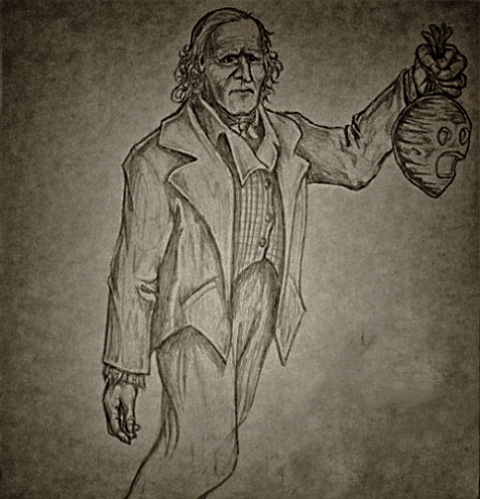
This tradition of making a jack-o-lantern goes back long ago in Ireland. They used turnips then. The Irish carved these vegetables and left them on doorsteps to ward off evil spirits. But it did not become part of Halloween until 1866. That was in America, and not in Ireland or Britain. There is no documented proof to substantiate that the jack-o-lanterns were ever part of Halloween before this date.
There is folklore behind the jack-o-lantern. In one version of the story, Stingy Jack was a miserly old man who runs into the Devil. He asks if the Devil would turn into a coin he could use to pay some Christian villagers he owed. These that would be a great joke.

But Jack pocketed him. He had a cross in the pocket, too. The Devil was stuck, and the only way he would be freed was if he promise not to take Jack's soul when he dies. The Devil agreed to the deal and set free.

Jack finally passes away. His spirit tries to enter into Heaven, but the gates remain shut to him. There is too great of a stain on his soul for Heaven to allow him inside. And thanks to his agreement with the Devil, he discovers that he is barred from Hell, too. The Devil tosses him a turnip and an ember made from Hellfire.

“Take that turnip, dig all its insides out, and place the ember inside it. Use it as a lantern to find your way across the mortal world to find a resting place. That is all I will do for you. Good riddance.”

So with only the lantern to light his way, Jack wanders the earth and searches for a resting place. He never finds it. Jack became known as Jack-o'-Lantern.
There are other versions of this Irish tale, even an African-American one. One of those tales uses the Grim Reaper in place of the Devil, The Grim Reaper takes Jack's head to Hell with him. Jack uses a pumpkin to replace his head.

When you carve that pumpkin, and set a lighted candle or battery operated candle inside it, stand on your porch and watch the costumed children wandering the street. Think of Stingy Jack, doomed to roam the earth forever.


Will you take pity on him if he comes to your door?

Friday, May 22, 2015

Supernatural Friday: Beware of Big Hairy Toes! (Retold Folktale)


 http://www.campfirecapers.com/wp-content/uploads/2012/02/campfire.jpg

As I am working on a horror wip at this time, I found this old folktale and rewrote for your Supernatural Friday of Memorial Day Weekend enjoyment.  As you go camping this summer, maybe even this weekend, it is spooky tales like this that are told around the campfire. Let's restart a tradition and get that fire going in the woods or at the beach, and tell spooky stories. 

Once upon a time an old woman went out in the woods. She planned to dig up roots to cook for dinner. Suddenly, she spotted something funny sticking out of the leaves. Digging around it, she discovered it was a great big hairy toe. Now it came to her that there was good meat on it and it might make a tasty dinner, so she stuck it in her basket and took it home.
Back at her cottage, the old woman boiled hairy toe soup in a kettle. That night she had the soup for dinner. The old woman went to bed that night with a full stomach and a big smile.
Around midnight, a cold wind arose and blew in the tops of the trees around the old woman's house. A large black cloud crept over the moon and from deep in the woods a hollow voice called out, "Hairy toe! Hairy toe! I want my hairy toe!"
Inside the house, the old woman stirred uneasily in her bed and nervously pulled the covers up over her ears. She forced herself back to sleep.
Something stomped from the woods as the wind whistled and jerked at the treetops. In the clearing at the edge of the forest, the same hollow voice said: "Hairy toe! Hairy toe! I want my hairy toe!"
Inside the house, the old woman shuddered and turned over in her sleep.
A, stomping sound stopped outside the cottage. The night creatures shivered in their burrows as a hollow voice howled: "Hairy toe! Hairy toe! I want my hairy toe!"
The old woman snapped awake and with her heart pounding and her stomach clenching, she leaped out of bed, she ran to the door and barred it. Knowing her cottage was secure, she lay back down to sleep.
The front door burst open with a bang, snapping the bar in two and sending it flying into the corners of the room. The sound of giant feet stomping up the stair came to the old woman’s ears. Shaking, she peeped out from under the covers. A massive figure filed her doorway. "Hairy toe! Hairy toe! I want my hairy toe!"
The old woman bolted upright and screamed: "I ATE your hairy toe!"
"Yes, you did," the giant figure said as it advanced into the room. It grabbed her.
No one living in the region ever saw the old woman again. The only clue to her disappearance came from a giant footprint pressed deep into the loose soil of the meadow beside the house. The footprint was missing the left big toe.


 http://cf.ltkcdn.net/paranormal/images/std/156364-377x300-Telling-stories-around-the-campfire.jpg

Thursday, September 18, 2014

Supernatural Friday: Moon Superstitions


A full moon rising on Friday the 13 is a very rare occurrence, with the next predicted to happen by NASA in August 2049. The last Friday the 13 full moon happened in October 2000.

                        Full Moon rising over Old Town Petersburg in July.

This past June 2014 we had what is called a strawberry moon. The “strawberry” moon, gets its name from the reddish color, and according to the Farmer’s Almanac, June is strawberry season.

In folklore, there are many myths concerning full moons and Friday the 13 that have led to superstitions surrounding the full moon. An ancient Babylonian manuscript prescribes that women are more fertile during a full moon. Many women today believe that their menstrual cycles correspond to the moon. There are stories that more women go into labor during the full moon. This belief has not been confirmed by scientific studies. In ancient Greece, Diana the Goddess of the Hunt was associated with both the moon and child-birth, demonstrating that this is an ancient association held by humans for centuries.

The most common myth surrounding the full moon is that it evokes madness. The word “lunacy” stems from the root “lunar.” From werewolves to myths about a higher rate of insanity homicide, and suicide, lunacy affected by the full moon appears frequently in old folklore.  There is no significant relationship between the full moon and insane or anti-social behavior though. Because the moon is such a powerful astronomical force that affects the earth’s tides and allows humans to track their lives according to a lunar monthly cycle, these kind of superstitions about the full moon are still popular.

Like there is the one that some people believe that there is a link between the full moon and seizures. Another tells about the full moon and the appearance of black cats. Some people believe that there must be a strong link between the moon and human behavior because of how much the moon affects the earth from a physical standpoint.

When I did an investigation in July on the full moon night, my group and I had some interesting paranormal results. Whether that was due to the moon as some think, it is hard to prove.

In Ireland it was believed to be bad luck to see the full moon reflected in a mirror. The worse luck happened if a person stared at the moon through the branches of a tree. The worst luck of all was if the light of the full moon shone on your face as you slept. If this happened, it meant that you were going to die.


A blood moon (like one happened in April 3014) signals a certain foreboding. Like the portent of the apocalypse. Though the moon has turned “into blood” several times before, and nothing apocalyptic happened.

Mothers refused to hang their baby’s nappies out in the moonlight for fear of bad luck.” A 1621 guide to healthy living helpfully offers the following advice: “When thou goest to thy bed… draw close the curtaines to shut out the Moone-light, which is very offensive and hurtfull to the braine, especially to those that sleepe.”

Those careless enough to sleep under a full moon risked insanity, blindness, or even being turned into a werewolf (but only if it happened to be a Friday night).

Pointing at the moon has been considered unlucky. Some say that the “man in the moon” residing there, considers it rude. A superstition from the British Isles says that anyone who points at the moon nine times cannot enter heaven, no matter how pious he or she has been.

It was believed in ancient times, that moon’s silvery glow was made of silver. That is the reason the metal became one of its symbols.

The commonest superstitions connected with the new moon are: seeing the thin crescent over the left shoulder is lucky.  Seeing it straight before you will signify good luck to the end of the season. Any wish made at the first sight of the new moon will come true, Superstitious persons believe that the time of the new moon is propitious to planting, courtship, the starting of new business ventures or trips, cutting the hair or fingernails to effect better growth, and many other things to be done.

Thursday, March 20, 2014

Spring 2014 is Here!


Spring begins today with the vernal equinox at 12:57 P.M. EDT. 

 The vernal equinox brings increasing daylight, warming temperatures, and the rebirth of flora and fauna.
The word equinox is derived from the Latin words meaning “equal night.” 


According to folklore, it is said that you can stand a raw egg on its end on the equinox.The Farmers Almanac said they tested to see if it was true. As was posted: "For a full workday, 17 out of 24 eggs stood standing. Three days later, we tried this trick again and found similar results. Perhaps 3 days after the equinox was still too near. Try this yourself and let us know what happens!" Maybe you should do your own test and see what happens. Post it in the comments what you got.

Spring Folklore and Verse:

One swallow does not make a spring.
Bluebirds are a sign of spring; warm weather and gentle south breezes they bring.
In spring, no one thinks of the snow that fell last year.
Don’t say that spring has come until you can put your foot on nine daisies.
Spring-time sweet!
The whole Earth smiles, thy coming to greet.


Thursday, September 19, 2013

Supernatural Friday: The Devil in Folklore


The Devil is one of two main characters in my newly released short story, “Devil in the Details”  in the anthology, Harboring Secrets. The protagonist for ages against God and his angels, he has been known as Lucifer, a fallen angel, Satan, the Great Horned God, Mammon, dragon, Father of Lies, Abaddon, Accuser, Apollyon, Cloven Hoof, Beast, Beelzebub,  and Belial, to even name more names. The Devil is believed in many religions, myths and cultures to be a supernatural entity that is the personification of evil. The nature of the role varies greatly, ranging from being an effective opposite force to the creator god, locked in an eons long struggle for human souls on what may seem even terms to being a comical figure of fun or an abstract aspect of the individual human condition.

While mainstream Judaism contains no overt concept of a devil, Christianity and Islam have variously regarded the Devil as a rebellious fallen angel or demon that tempts humans to sin, if not commit evil deeds himself. In these religions, the Devil has assumed more of a dualistic status commonly associated with heretics, infidels, and other unbelievers.
In mainstream Christianity, God and the Devil are usually portrayed as fighting over the souls of humans, with the Devil seeking to lure people away from God and into Hell. The Devil commands a force of evil spirits, commonly known as demons. The Hebrew Bible (Old Testament) describes the Adversary as an angel who instigates tests upon humankind. Many other religions have a trickster or tempter figure that is similar to the Devil. One of these is Loki in the Norse mythology.

In one legend from Colonial America, the lawyer Daniel Webster goes up against the Devil and wins. There’s even a well know rock country song, 'Devil Down in Georgia,' where the fiddler in the story out fiddles the Devil. Another is folklore about a real person in history, Colonel Philip Lightfoot must danced against the Devil to save his land  at what is known as Dancing Point today. The legend says that the Devil caused the barrenness in the land and remarked that it was his, not Lightfoot’s. Colonel Lightfoot agreed to a contest between the two of them. They would see who was the best dancer and could last the longest, with the land as the prize. They marched to Dancing Point at dusk and shed their coats and tricorns. After building a large fire, both proceeded to dance their hearts out. Around and around a tree stump they whirled. Lightfoot had claims to being an accomplished dancer and he proved it that night. The Devil didn’t give up, as he was determined to win, but when the first rays of dawn painted the morning sky, the Devil knew he had lost. He limped away in humiliation, crossing the James River to Surry County. The old-timers report that he still lives there. This tale is in chapters in my Haunted Virginia: Legends, Myths and True Tales and Virginia's Haunted Historic Triangle: Williamsburg, Yorktown, Jamestown, and Other Haunted Locations. 

Another tale is about the Blues singer Robert Johnson who is supposed to have met the Devil at a crossroads in Mississippi, the Devil took his guitar off of him, tuned it, played a few songs and gave it back, from then on Robert Johnson could play the Blues better then anyone alive.


But most times, the human doesn’t win and loses his/her soul. Just as what happens to my heroine in “Devil in the Details.” Another such folklore where the mortal lost concerns a girl rushing to a dance. Her mother forbids her to go, saying the preacher said the dance was going to the devil. The girl goes anyway and ends up dancing with this handsome young man. He whiles her around ad around until she vanishes. He then bows to others at the dance and vanishes. The girl is winging her way to Hell.

There is also one from Devon England that in the 1800's a set of footprints in the shape of hoofs appeared over night in the snow going for hundreds of miles appearing to go straight over the roofs of houses and barns.

There are tons of stories of the devil in southern folklore. One told of how the devil would hide among goat herds in the form of a large billy goat. When a prospective sinner drew near, the devil stood on his hind legs and follow him until the person came to a crossroads. If the sinner would turn to confront the devil before he/she reached the crossroads, the devil took his/her soul. If not, then the sinner had best get to church as soon as possible and confesses his sins before he pass those same crossroads again. In the French-Canadian folktales of the 19th century argues that the legends involving the Devil can be categorized according to a trinity of basic tale types. The first type is the “beautiful dancer,” the second is the “builder of bridges and churches” and the final is the “instigator of pacts.”

Devil be or not, one should never sell their soul to strangers, for after all, the Devil is the Prince of Lies after all.


Here is short excerpt from "Devil in the Details."

They say the devil is in the details. Most especially when one sold their soul to the Devil in a literal sense. Then life and death becomes extremely important. 

I should have read that contract better before I signed it in blood ten years ago. 

Jenna tossed back the glass of scotch she held. The amber liquid burned a path down her throat to her stomach. The glass clinked loud as she set it down next to the empty bottle. It toppled over and spilled the scotch across the table’s surface. 

A giggle escaped her. Who gave a damn about a mess on one measly table? Or that she never been so drunk in her life. Not with her soul in trouble. Hell put things into perspective.

Buy Harboring Secrets in print at Amazon, Barnes and Noble, Books A Million and at your local independent bookstore. It is also available  on Kindle and as a Nookbook on BarnesandNoble.com. 


Friday, June 28, 2013

Supernatural Friday: Zombies Never Came From George Romero


Zombies are a term some reporter titled the ghouls in George Romero's "Night of the Living Dead." The zombie and the horror movie were married very early in the history of films. In fact, the 1932 movie, “White Zombie” which stared Bela Lugosi pretty much type cast the zombie as a movie monster.
Interestingly enough, zombies actually come from the Congo and not Benin where Voodoo comes from. The word, “nbzambi” refers to their primary sprit and/or refers to one’s soul. When the Trans-Atlantic slave trade mixed peoples from all over the African Atlantic Coast, the zombie found a new home in Voodoo.


Four kinds of zombies are in Voodoo; the Great Spirit, the Spiritual Soul, the Herbal Zombie, and the Bargained Zombie.

Li Grand Zombi: this is the snake spirit in Voodoo given the Congolese name for the same principal entity. The snake used by Marie Laveau in New Orleans was said to have been called “li grand zombi.” The Louisiana mud snake used in rituals is sometimes called “ouncongo.”

Now, that familiar living dead zombie of movie familiarity has two versions, one is spiritual and the other, chemical.

Spiritual Zombie: this follows an African belief that a person has two souls. One is called the Great Angle. The other one is called the Little Angle. When a person dies, the Great Angle immediately knows the person is dead and departs the body. The Little Angle, on the other hand, takes about three days to realize the body is dead (this seems to be close to how when someone passes away, it takes three days usually before they are buried. During that time, a witchdoctor may invoke the Congolese Ghédé spirit to reach the Little Angle and cause it to believe the body is not dead. The corpse is reanimated, using the Little Angle as a motor.


Herbal Zombie: The West Africans were master chemists in use of herbs and poisons.  To make a zombie chemically, it was necessary to cause the victim to have the appearance of death, then apply an antidote to revive them. The basic poison comes from the common blowfish. Dried and powdered, it is a nerve poison, and is applied mainly in one’s shoes, surreptitiously, and absorbed through the sweet glands in the feet. The poison inhibits the natural conductivity of the nervous system and causes the body to atrophy and look decreased.  This phase completes the deception of death. In the second phase the antidote, a paste from the seedpod of the angle’s trumpet flower is applied. The seedpod contains two types of active ingredients. The first is atropine to counteracts the nerve poisoning. The second is a hallucinogenic that causes both amnesia and disorientation. The final result is a person who appeared to have died, is resurrected, and is now mentally incoherent, but physically functional. A form of control.

In Haiti, which is most closely associated with the resurrected zombie, it is considered a fate worse than death to become a zombie. A zombie is supposedly an immortal slave. To become a zombie is considered a great catastrophe and a terrible fear far worse than death.

Bargained Zombie: This is a voluntary arrangement in which the volunteer bargains to have his lesser soul exorcised and keep by a Voodoo Queen. Due to this arrangement, the Voodoo Queen can protect and give advantages to the volunteer. At some point, the volunteer has to surrender the rest of his soul. This usually occurs when the Voodoo Queen dies, and is no longer able to protect the volunteer. The classic example of this the case of Jazz pioneer Jelly Roll Morton and his godmother, Voodoo Queen, Eulalie Hécaud.

Rougarou: Ah, this creature was used a monster of the week in a “Supernatural’ episode. There’s a swamp creature in Louisiana that is half man, half beast. It is a strong figure in Cajun folklore. Like a zombie, he is often the product of the manipulation of a deceased soul by a witchdoctor.  Although the legends of the rougarou are closely related to European werewolf tales, there are several distinctions between the European werewolf, the French loup-garou, and the night lurking, bayou-wandering creature called the rougarou. Yes, like the French loup garou (werewolf), it often has red eyes and is usually nocturnal. But just like a zombie, it is deathly afraid of frogs. 

A person who encounters the rougarou draws one or three drops of blood, that person then has the spell, and from there, the tale can be either light or dark. In the darker tale, usually the person who encounters the rougarou commits suicide. The darker tale is almost always associated with a person who told of the encounter in less than a year. According to local stories printed in several sources in the Ellender Memorial Library archives, these animals roam the streets at night. They antagonize wandering people until they attack it, stabbing or shooting it. At the first drop of blood the animal will return to its human form. The rougarou will tell the attacker who he is.  Often the rougarou is someone the witness knows or has heard of. The rougarou usually tells the witness if he informs others of this encounter within one year and a day, he too will become a rougarou.
This popular folklore creature is often used to scare small kids into good behavior. The term rougarou has even become so popular in south Louisiana that it has evolved into a descriptive adjective, "rougarouing," used to describe a person who runs around or stays up late at night. The annual Rougarou ball on deep Bayou Goula happens every St. John’s Eve and is real.